
Giving Beloved Software a Second Life With AI
Twenty-three years ago, Tjark Derlien released Disk Inventory X—a free macOS utility that draws your disk as a colorful treemap mosaic. For thousands of Mac users it became a reflex: running out of space, open Disk Inventory X, instantly see the culprit.
But the app stayed behind on aging frameworks, and modern Macs kept drifting away from it.
I wanted to test a hypothesis: can AI give software like this a second life?
The answer is yes.
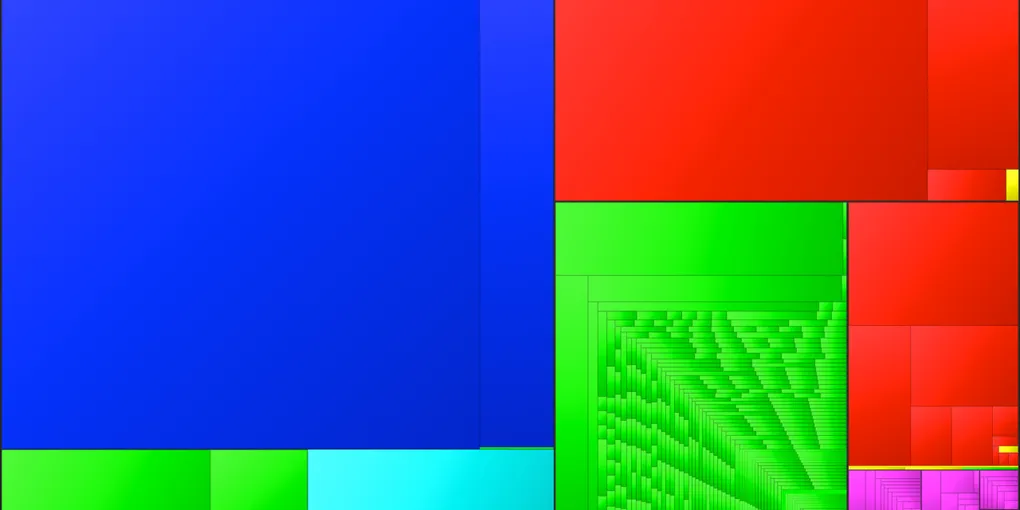
Meet DiskInventoryY: a full rewrite in Swift and SwiftUI, native on Apple Silicon and built for macOS 14 and later. The original color palette was ported verbatim from the source code, down to its ordering: the largest file kind is always blue, the runner-up red.
What the Rewrite Produced
The result includes:
- a parallel scanner that can process a 6.6-million-file disk in about nine minutes on an M1
- classic cushion-shaded cells rendered at full tree depth
- a synchronized outline and treemap
- Quick Look and Trash actions
- saved scans
- dark mode
- 13 releases and 59 automated tests
- a GPL license, just like the original
It Was Not One Prompt and Done
It took several passes with different generations of language models. Early sessions built the skeleton and infrastructure. Later models helped with the final UX polish and race conditions in the multithreaded scanner.
The bugs were very real.
The Open Folder button silently failed because of a SwiftUI subtlety: two fileImporter modifiers on one view, where only one works. The getattrlistbulk system-call parser read attributes in the wrong order. An APFS mount point sent the disk walk into infinite recursion.
AI made each implementation pass faster, but it did not remove the need to understand the platform, isolate failures, and verify behavior on a real system.
Security and Release Work Stayed Human
Manual steps did not disappear either.
The Developer ID certificate, an app-specific password, and Apple’s notarization flow were all handled by hand. The credentials lived only in Keychain. Not a single secret touched Git or a cloud prompt.
That boundary matters. AI can accelerate code generation, refactoring, diagnosis, and test creation. Release authority and secrets should still be constrained deliberately.
The Real Takeaway
The barrier to reviving abandoned software you love has collapsed.
What once required weeks of a motivated developer’s time can now take a few evenings of dialogue with a model—plus careful architecture, testing, debugging, and the manual work that still requires a human decision or credential.
The largest thank-you goes to Tjark Derlien. None of this would have been possible if he had not released the original under the GPL. The original still lives at derlien.com, and its idea now lives on modern Macs too.
You can download the signed and notarized build or inspect the source on GitHub.
FAQ
Can AI realistically rewrite abandoned desktop software?
In this case yes. DiskInventoryY is a full Swift and SwiftUI rewrite of Disk Inventory X, native on Apple Silicon for macOS 14 and later, with a parallel scanner that processes a 6.6-million-file disk in about nine minutes on an M1, 13 releases and 59 automated tests.
Was it one prompt?
No. It took several passes across different model generations: early sessions built the skeleton and infrastructure, later ones helped with UX polish and race conditions in the multithreaded scanner. The bugs were real: two fileImporter modifiers on one view where only one works, a getattrlistbulk parser reading attributes in the wrong order, an APFS mount point causing infinite recursion.
What stayed manual?
Release authority and secrets. The Developer ID certificate, the app-specific password and Apple’s notarization flow were handled by hand, and the credentials lived only in Keychain. No secret touched Git or a cloud prompt.
This article was first published on LinkedIn.